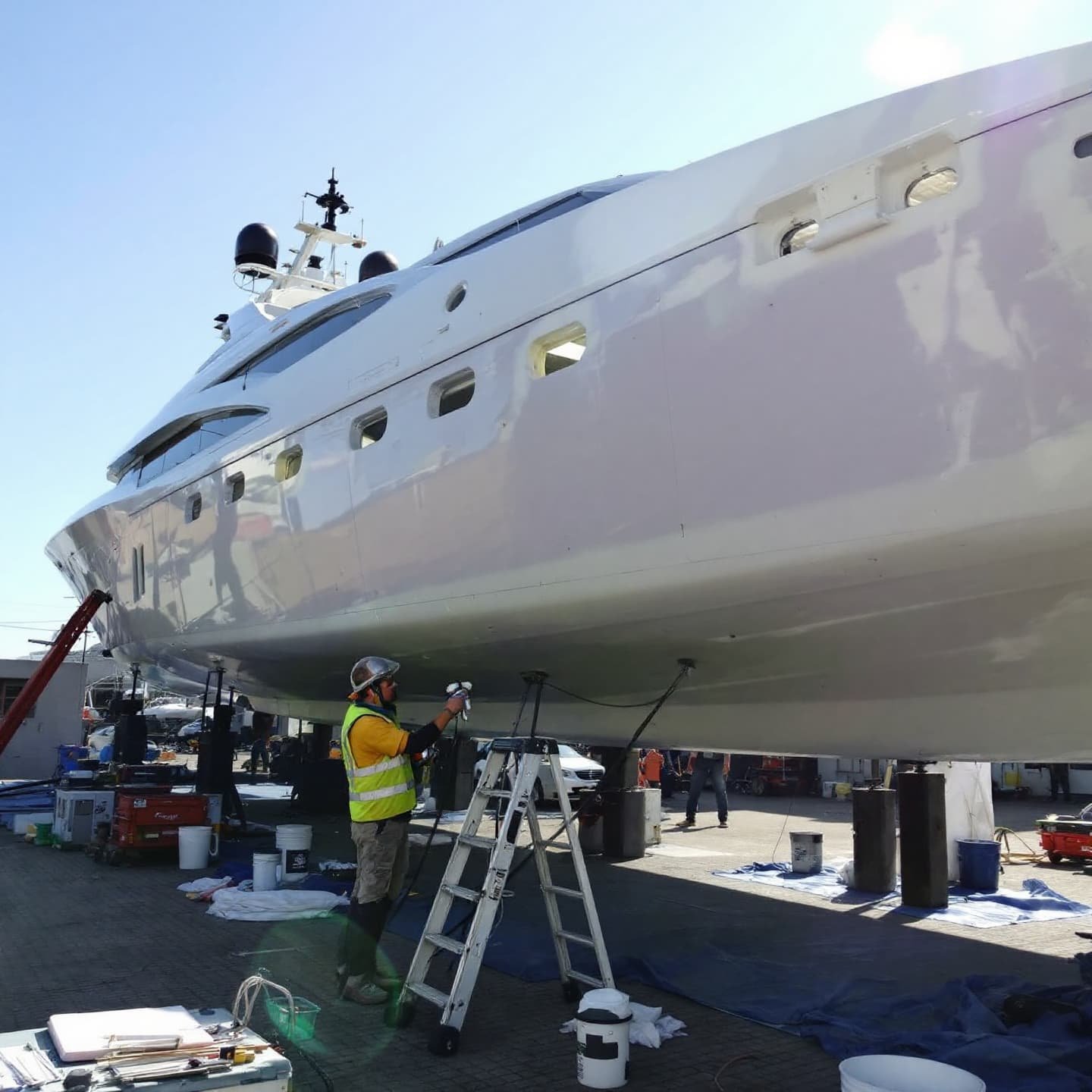
- Most boats kept afloat in Spain need antifouling once a year.
- Eroding (self-polishing) paint suits most leisure boats; hard paint suits fast boats and boats that are scrubbed often.
- Late winter and early spring are the busiest haul-out months, so book early.
- Preparation matters more than the paint: a poor sand and prime will not last a season.
Why fouling is faster in Spain
Fouling organisms grow faster in warm, sunny, nutrient-rich water. Along the Mediterranean coast of Spain sea temperatures stay comfortably warm from late spring well into autumn, and harbours are sheltered and still. A boat that would cope with one coat every two years in colder northern waters will usually show a green beard and barnacles on the waterline, rudder and saildrive within months if the antifouling is tired.
The consequences are practical rather than cosmetic: a fouled hull can lose a noticeable amount of speed, burns more fuel, makes the engine work harder and clogs raw water intakes. Barnacles inside the propeller tunnel or on the shaft also reduce propeller efficiency and can cause vibration.
How often should you antifoul?
As a rule of thumb, a boat that lives in the water all year in Spain should be antifouled every 12 months. Boats that are dry-stored or lifted out between trips can go longer, and boats that are used very little may need more frequent attention, because most paints work best when the boat moves.
- Kept afloat all year: annual haul-out, wash, inspection and new antifouling.
- Afloat in summer only: one coat before launch is usually enough, with extra coats on the waterline and leading edges.
- Dry stack or trailer: often no antifouling at all, or a light coat every couple of seasons.
Eroding, hard or hybrid?
Eroding or self-polishing paints wear away slowly as the boat moves, constantly exposing fresh biocide. They avoid a thick build-up of old layers and suit most cruising sailboats and motorboats at displacement or moderate planing speeds.
Hard paints stay on the hull and can be scrubbed without losing much film, which makes them a good fit for fast planing boats, racing yachts and boats that are cleaned regularly by a diver.
Hybrid paints try to combine both behaviours. Whatever you choose, check compatibility with the paint already on the hull: putting an incompatible system over an old one is a common reason for flaking.
Aluminium hulls, outdrives and saildrives need copper-free products formulated for metal, otherwise you risk galvanic corrosion. Always check the label before a can is opened.
When is the best time of year?
Most owners in Spain antifoul between February and May so the boat is ready for summer. That is exactly when boatyards, travel lifts and painters are busiest. If you can be flexible, an autumn haul-out after the season is often easier to schedule, and the hull gets a fresh coat before winter fouling begins.
Ask for photos of the hull before washing. They show how well the old paint performed and help decide whether you need the same product, more coats or a different system.
What a proper antifouling job includes
- Haul-out and high-pressure wash as soon as the boat comes out of the water, before growth dries on.
- Inspection of the hull, keel joint, rudder, shaft, cutlass bearing, through-hulls and anodes.
- Sanding or scraping loose paint, then spot-priming bare areas.
- Masking the waterline and applying the agreed number of coats, with extra on the leading edges.
- Propeller and shaft treatment (dedicated prop coatings work better than ordinary antifouling).
- New anodes where needed, and a written note of what was done and which product was used.
Signs your antifouling has failed early
Patchy growth, paint lifting in sheets, slime that comes back days after a scrub or barnacles clustered on one side of the hull all point to a problem with preparation, compatibility or film thickness. In those cases another coat on top rarely helps; the old system may need to be taken back.
Getting it done without being there
Many owners who keep a boat in Spain live elsewhere for most of the year. Krautic coordinates the lift, the yard slot and a vetted local painter, sends you a fixed written quote beforehand, and shares photos of the hull before and after so you can see exactly what you paid for. More on our antifouling service.